More than a decade ago, when I was assigned there, the term "computing center" was already pretty outdated.
System operations outsourcing had already caught on regardless of company size, and modern "data centers"—equipped with state-of-the-art earthquake resistance and uninterruptible power supplies—were popping up all across the country.
Back when I was a fresh recruit, senior employees took me to tour various data centers. There were massive white facilities that suddenly appeared in the middle of suburban mountains, and hidden subterranean facilities beneath prime, stylish real estate in Shibuya. They all had the vibe of a secret hideout on the outside, paired with a "futuristic" interior straight out of an '80s sci-fi movie.
Compared to those, "legacy" was the perfect word for a "computing center."
At least, that was certainly true for Computing Center No. 2.
Built and brought online in 1969, Computing Center No. 2 was already 40 years old when I joined the company. It was one of the earliest dedicated information processing facilities built in Japan.
In its heyday, it housed large-scale printers for direct mail and business forms, alongside dozens of state-of-the-art mainframes. Up to 200 people—regular staff, part-timers, delivery drivers, and vendor service technicians—worked there around the clock.
But as we all know, industry trends like downsizing, outsourcing, and cloud migration—along with the sheer decay of the aging facility itself—gradually stripped Computing Center No. 2 of its purpose.
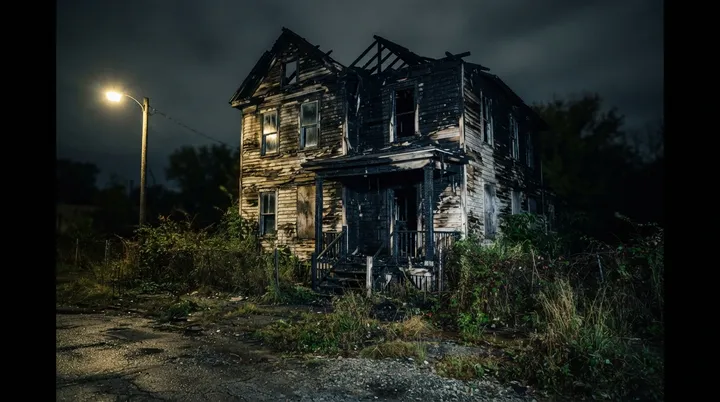
Taking a train and a bus for over two hours from headquarters in central Tokyo, I arrived at a building that, despite its massive size, looked utterly neglected. Weeds grew wild around the main gate where an elderly guard sat, and parts of the building were chipped and crumbling from decades of exposure to the elements.
Old-fashioned and forgotten—it felt completely unsuited for a company boasting of being at the cutting edge of IT. That was my first impression upon visiting for the first time.
One day, during my second year as a sales representative, my supervisor handed down a reassignment order. Starting next week, I was to handle maintenance duties at Computing Center No. 2.
I thought the exact same thing you're probably thinking right now: This is a demotion.
What could I possibly do at a computing center when I knew nothing about computers, programming, or system operations? Had I enraged a client somewhere? Made some blunder that pissed off an executive? A million thoughts raced through my head, but I had no grounds to refuse, so I had no choice but to accept.
Inside, the center was dead quiet. The facility manager, who greeted me at the entrance, gave me a tour and mentioned that lately it was rare to have more than three people in the building at any given time.
The first floor consisted of a few spacious storage rooms and conference rooms, but they were mostly empty, save for a few vacant server racks and lockers scattered around haphazardly.
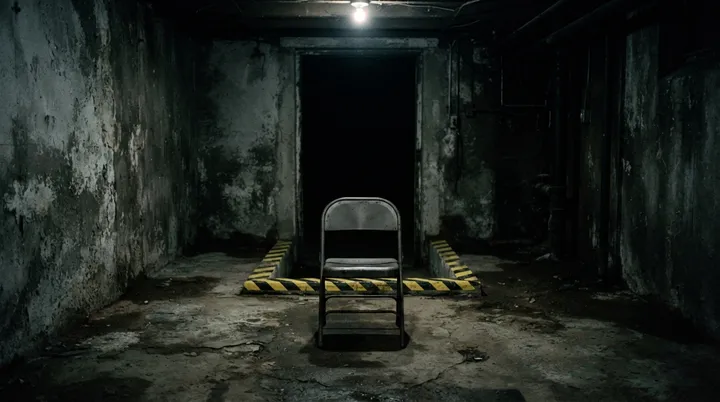
Down in the basement were two large rooms. The wall separating them had been knocked down, leaving them joined together with only green painter's tape on the floor marking the division. In practice, the basement consisted of just one massive open room, along with a restroom, a hallway, and a staircase.
The entrances to both rooms had signs reading "Dedicated Room 1" and "Dedicated Room 2," respectively, but the door to Dedicated Room 2 was permanently locked. The only way in was through the door for Dedicated Room 1.
Stepping into Dedicated Room 1 with the manager, I was met with a bleak, desolate sight. In the center of the dimly lit room stood a single desk and a folding metal chair, where an elderly man was sitting.
Dedicated Room 1 became my new workspace starting that day, and I received my handoff training from the older gentleman.
The job duties were remarkably simple.
Work operated on a two-shift rotation. I would enter Dedicated Room 1 at either 9:00 AM or 7:00 PM and take over the logbook from the employee finishing their shift.
I would sit on the metal folding chair inside the room and "monitor" the direction of Dedicated Room 2.
While Dedicated Room 1 was lit by a few humming fluorescent tubes, Dedicated Room 2 had no lighting whatsoever and was pitch black. However, directly in front of where I sat, two green lights were visible, glowing side-by-side in the darkness.
If one or both of these green lights turned yellow, I was to go upstairs within 15 minutes and call the "Security Center" using a dedicated phone on the first floor.
Twelve hours after starting my shift, I would record whatever happened during my shift in the logbook, hand it off to my replacement when they arrived, and head home.
That was literally it.
There were, however, a few strict rules and prohibitions.
One: Mobile phones and any other recordable electronic devices must be left in the first-floor lockers and never brought into the basement.
One: Never touch the basement light switches.
One: Never cross the painter's tape into Dedicated Room 2.
One: When calling the Security Center, do not return to the basement until instructed to do so. And so on.
I had endless questions about why, but I dutifully followed every single rule.
We don't need to understand the underlying mechanics of computers, the internet, or smartphones to use them.
Clients can seamlessly use software packages even if programmers have spent years adding and tweaking features until the source code became an incomprehensible, tangled mess.
This was no different. There was no need to understand how or why things worked; as long as I followed the established procedure, I got paid even better monthly wages than before.
The job at Computing Center No. 2 was my dream gig.
Aside from occasionally glancing into the dark ahead of me, all I had to do was read books. At first, mindful of the security camera in the room, I stared intently at the two glowing green lights. But by day three, I started slacking off, and within a week, I was boldly crossing my legs on the folding chair, engrossed in paperbacks. That said, I made sure to look up after every single line to verify that the lights hadn't changed color. By the way, the lights turned from green to yellow only about once every two months on average.
The two-shift system was covered by four people, including myself. About six months after my assignment, Mr. A—the older employee who had trained me—retired, and a younger coworker, I-kun, was assigned to take his place.
We hit it off quickly during training, and soon we were grabbing drinks together on our days off.
He was an exceptional employee—knowledgeable about IT and holding several industry certifications that would make switching jobs a breeze. He had a great personality, too, making it baffling why he had been shuffled off to a boring, unproductive dump like Computing Center No. 2.
Yet, he seemed intensely fascinated by our work at the center. Once, at an izakaya, I asked for his take on what our job was actually about.
He speculated that lurking in the darkness of Dedicated Room 2 was a mainframe running the core accounting system for a major financial institution.
Back when major bank mergers were fresh in everyone's memory, people used to say that even as most corporate core systems transitioned to open platform systems, financial institutions could never abandon their mainframes (a claim that remains partially true even today).
If you carelessly upgraded such a complex system, there was no telling what catastrophic failure might occur. That's why, he reasoned, they couldn't move it out of this near-abandoned computing center.
And to yield maximum profit from minimal investment, our company was skimping on electricity and equipment maintenance, opting instead to pay a handful of employees to watch over the mainframe in person.
That made sense; his theory sounded plausible enough. At the same time, it felt completely off the mark. No matter how penny-pinching our executives were, would they really maintain such a risky maintenance setup?
Besides, why not just use an automated monitoring tool? It didn't explain why they paid us decent salaries just to stare at two warning lights with our own eyes.
To be honest, I didn't really care what the true nature of the job was. While nodding along to I-kun's theory, I was secretly contemplating which book to bring on my next shift.
About a year after I-kun joined us, I received an email from him in the middle of the night. It had no subject line and no body text—just a single attached image file.
The attached photo showed pitch darkness, as if painted over in black, with two red lights glowing side-by-side.
An indescribable anxiety washed over me. First off, I-kun was supposed to be working the night shift right now. That meant he had sent this email from a workplace where mobile phones were strictly forbidden.
And what were those two red lights? I naturally guessed they were the lamps we monitored every day. But the color was the problem. Not green, not yellow—I had never seen them red.
Could an unprecedented crisis be unfolding at Computing Center No. 2 right now?
But if so, wouldn't an incident alert have been sent to our corporate group email? Shouldn't my company phone be ringing?
I wanted to believe he had called the Security Center before taking the time to email me, but could the usually composed I-kun have panicked in the face of an unexpected situation?
A barrage of restless thoughts swirled in my head, but the bottom line is that I did absolutely nothing. I could make up all kinds of excuses, but at the end of the day, I just didn't want to get dragged into trouble. And as it turned out, that was probably the right call.
Ultimately, Computing Center No. 2 operated as usual the next day and beyond, and the company and its employees functioned as if nothing had happened. The only difference was that I-kun had vanished from our lives.
I haven't been able to reach him since receiving that email. He was absent from the day of the email onward, and neither the facility manager nor any other employees could contact him either.
I-kun's disappearance was a topic of conversation among those involved for a few days, but in a workplace with so few staff, there was little room for rumors or speculation to spread. Within a week, operations at Computing Center No. 2 moved forward as if nothing had happened—as if I-kun had never existed in the first place.
The facility manager covered the gaps in I-kun's shift schedule.
In 2020, with no warning whatsoever, Computing Center No. 2 came to the end of its half-century of service. Six months before the decision, I was appointed facility manager, though I knew the title carried zero real authority. After approving a few proposal documents drafted under instructions from executive management, the closure and demolition of Computing Center No. 2 were finalized in the blink of an eye.
On the day the movers came to clear out the building, I turned on the lights in Dedicated Room 2 for the very first time, at the contractors' request.
There was nothing there.
It wasn't just that there were no servers, mainframes, or other computers. There were no racks, no lockers, no chairs, no desks—and above all, not even the two green glowing lights we had spent every single day monitoring until yesterday. Nothing.
Beyond the green painter's tape was just a vast, empty space.
Had someone cleared it out overnight? A quick check of the surveillance footage at the entrance, statements from the staff and security guard, and the shift logs confirmed that was impossible.
What on earth had we been "monitoring" in this empty room for over a decade? Looking back, even for a room with the lights off, it had been too dark.
As I stood there dumbfounded, the removal process proceeded without a hitch, and a few months later, the site was reduced to an empty lot.
I still have the image I-kun emailed me—the one showing those two red lights.
Glowing intensely from out of the darkness, those lights look for all the world like the eyes of a monster... glaring intently at its prey. At us.